


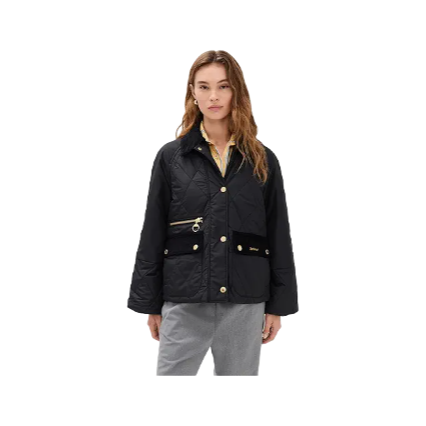
Barbour Women’s Martha Quilted Barn Jacket
- Stay stylish and warm with this mid-weight, non-stretch quilted jacket.
- Features a chic corduroy trim and a timeless quilted design for a classic look.
- Designed for functionality with flap front pockets and both interior and exterior zip pockets.
- Comes with a collared neck and fully lined interior for added comfort and durability.
- Perfect for transitional weather or layering on cooler days.
$340.00
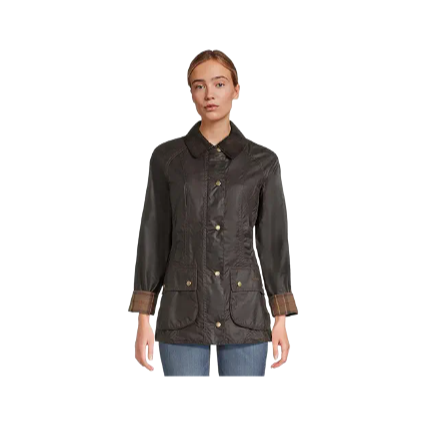
Barbour Women’s Barbour Classic Beadnell Wax Jacket
- Crafted from durable 6 oz waxed cotton fabric for superior water repellency and windproof protection.
- Compatible with an optional liner vest for added warmth, making it ideal for all seasons.
- Features a timeless design with practical functionality.
- Easy to care for with a simple sponge cleaning method to maintain its pristine condition.
- A versatile piece for both countryside and city adventures.
$378.00
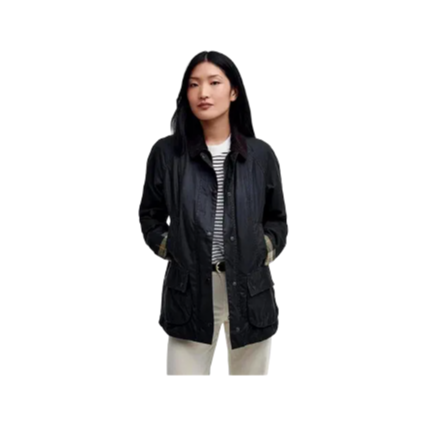
Barbour Women’s Beadnell Waxed Jacket, Sage
- Classic design with a corduroy collar and long sleeves for a traditional, sophisticated look.
- Built for practicality with a front zip closure and snap-over storm flap for extra protection.
- Made from 100% Sylkoil Waxed Cotton with a tartan lining for a touch of heritage style and warmth.
- Nylon-lined sleeves ensure ease of wear and durability.
- Easy to maintain with sponge cleaning, making it a perfect choice for outdoor wear.
$378.00
How I navigated the world of waxed cotton, heritage styles, and British countryside chic
As the crisp autumn air swept through the countryside on my weekend getaway to the Cotswolds, I found myself enviously eyeing a woman walking her chocolate Labrador along a leaf-strewn path. It wasn’t just her confident stride or the picturesque setting that caught my attention—it was her jacket. Weathered at the elbows, perfectly fitted, and exuding that ineffable quality of something both practical and stylish. “Excuse me,” I called out, jogging to catch up. “Your jacket—is it Barbour?”
She smiled, almost proudly, and ran her hand along the waxed sleeve. “Ten years and counting. Best purchase I’ve ever made.”
That chance encounter sparked what would become a minor obsession. I’d always appreciated Barbour jackets from afar, seeing them on celebrities at Glastonbury or in heritage-inspired fashion spreads, but I’d never taken the plunge myself. The world of Barbour seemed intimidating—a maze of styles, fits, and features with a century of history behind them. But after that weekend, I knew: I needed to find my perfect Barbour jacket.
What followed was months of research, countless try-ons, conversations with long-time Barbour enthusiasts, and eventually, a love affair with what has become my most treasured outerwear piece. This guide is everything I wish I’d known from the start—my personal journey through the world of women’s Barbour jackets, and how you can find the one that will become your faithful companion for decades to come.
Understanding the Barbour Legacy: More Than Just a Jacket
Before diving into the specifics of choosing a jacket, I found it helpful to understand what makes Barbour special. Founded in 1894 in South Shields, England, J. Barbour & Sons began by creating durable outerwear for fishermen, sailors, and dockworkers facing the harsh North Sea elements. What started as purely functional workwear evolved into a symbol of British countryside living, eventually earning Royal Warrants from three members of the British Royal Family.
The company remains family-owned five generations later, which explains why the quality has remained so consistent. This isn’t fast fashion; this is investment dressing with history. When you buy a Barbour, you’re not just buying a jacket—you’re buying into a tradition of craftsmanship that values longevity over trends.
I remember touching my first Barbour in a small country outfitters shop in Yorkshire. The distinctive smell of the waxed cotton, the weight of the fabric in my hands, the meticulously finished details—it was immediately apparent why these jackets inspire such devotion. They feel substantial in a way that’s increasingly rare in women’s clothing, designed to protect and last rather than simply adorn.
The Iconic Materials: Waxed Cotton vs. Quilted
My first major decision was between Barbour’s two primary jacket types: the traditional waxed cotton or the lighter quilted styles. Each has distinct advantages and different care requirements, so this choice would determine much of my Barbour experience.
Waxed Cotton: The Classic Choice
Waxed cotton is Barbour’s original and most iconic material. It’s cotton fabric treated with wax to make it water-resistant while remaining breathable. The unique properties include:
- Exceptional weather resistance that improves with age
- A distinctive patina that develops over years, making each jacket unique to its owner
- That characteristic Barbour smell (which I’ve grown to love but initially found quite strong)
- Durability that can span decades with proper care
- The need for occasional rewaxing to maintain water resistance
The first time I tried on a classic Beadnell in waxed olive, I was struck by the weight—these jackets have substance. The material felt stiff initially, but Barbour enthusiasts assured me this would soften dramatically with wear, molding to my body like a second skin. “Think of raw denim,” one sales associate told me. “The break-in period is part of the journey.”
What I didn’t anticipate was how the waxed cotton would capture memories. Every crease, fade, and mark tells a story. The slight wearing at my elbows reminds me of the writing retreat where I finished my manuscript. The faint marks near the pocket recall a sudden downpour during a countryside hike when I discovered just how waterproof my Barbour truly was.
Quilted: The Lighter Alternative
Barbour’s quilted jackets offer a different experience:
- Significantly lighter weight and more flexibility from the start
- No break-in period required
- Often more flattering for women’s silhouettes with strategic quilting patterns
- Easier care—many are machine washable
- Less weather resistance than waxed styles, but still practical for light rain
- More suitable for transitional seasons or as a layering piece
I was initially drawn to the quilted Barbour jackets for their immediate comfort and contemporary feel. The Beadnell in a diamond quilted navy felt luxurious and feminine, while still carrying Barbour’s distinctive details and quality construction.
After much deliberation, I chose both—a waxed jacket for genuine foul weather and country walks, and a quilted style for city life and travels. If your budget allows for just one, consider your primary use case. If you’re facing serious elements or want that iconic Barbour patina, waxed is the way to go. If comfort and versatility are priorities, quilted might be your perfect match.
Classic Women’s Barbour Styles: Finding Your Silhouette
Barbour offers numerous women’s jacket styles, but several have achieved iconic status. Understanding the differences between these core styles helped me narrow my choices.
The Beadnell: The Feminine Classic
The Beadnell is essentially the women’s version of the classic Bedale, redesigned with a more flattering, feminine cut. Features include:
- A slightly tailored silhouette that avoids the boxy look of some heritage styles
- Two-way front zipper with snap closure
- Handwarmer pockets plus generous cargo pockets
- Corduroy collar that feels lovely against the skin
- Available in both waxed and quilted versions
- A length that hits at the hip, making it practical for active wear
When I tried on the Beadnell, I immediately understood its popularity. It feels quintessentially Barbour without overwhelming a woman’s frame. The proportions are thoughtful—pockets large enough to be useful without adding bulk, a collar that frames the face beautifully, and a silhouette that accommodates layers without looking shapeless.
The Beaufort: The Equestrian Influence
The Beaufort offers a longer silhouette:
- Falls to mid-thigh for greater coverage and warmth
- Features a game pocket at the back (originally designed for carrying hunted game, now perfect for a newspaper, gloves, or scarf)
- Slightly more relaxed fit than the Beadnell
- Side vents for ease of movement, especially when riding
- Distinctive bellows pockets with generous storage
I found the Beaufort to provide a more substantial feel and appreciated the additional coverage during blustery days. The back game pocket initially seemed like an oddity, but has become one of my favorite features—perfect for stashing gloves, a light scarf, or even a paperback for countryside pub visits.
The Utility Jacket: Modern Practicality
The Utility style offers a contemporary take on Barbour’s heritage:
- Multiple pockets designed for modern needs
- A slightly more structured silhouette
- Often features internal drawstrings to adjust the waist
- Design details that feel fresh while honoring Barbour traditions
When I tried the Utility jacket, it felt like Barbour had read my mind about storage needs. The pocket configuration is thoughtful—perfect for a phone, keys, and other essentials without creating bulk.
The International: Motorcycle Heritage
For something completely different, the International celebrates Barbour’s motorcycle history:
- Distinctive slanted chest pocket inspired by the original International motorcycle suits
- Belt detail that creates a defined waist
- Often in slightly different cotton weights than the country styles
- A fashion-forward look that still honors Barbour’s utility roots
The International immediately transforms an outfit, lending an edge to even the most basic jeans and sweater combination. Of all the Barbour styles, this one makes the most distinctive fashion statement while maintaining the brand’s quality and functionality.
Sizing Secrets: The Most Critical Decision
If there’s one area where my Barbour research paid dividends, it was sizing. Barbour has specific sizing quirks that are essential to understand before purchasing, especially if buying online.
Traditional Barbour jackets run large by design. This is intentional—they’re created to accommodate layers underneath, from light sweaters to substantial knitwear. This heritage sizing can be confusing for women accustomed to contemporary fashion sizing.
After trying numerous sizes, I found my perfect fit by sizing down. While I typically wear a US 8/UK 12 in most brands, my waxed Beadnell is a UK 10. This still allows room for a light sweater while maintaining a flattering silhouette.
Some key sizing considerations I discovered:
- Consider your layering plans. If you intend to wear your Barbour primarily as a rain shell over light clothing, you might size down even further. If you plan to layer over heavy sweaters or light jackets, your regular size might be best.
- Different styles fit differently. The Beadnell tends to be more fitted than the Beaufort. The International often runs slimmer than the country styles.
- Quilted jackets typically run more true to size than waxed styles, as they’re designed for a closer fit.
- Sleeves might feel short initially on waxed jackets, but the material stretches with wear.
- Most Barbour jackets come in numbered UK sizing rather than S/M/L. Know your UK size before shopping (typically UK size = US size + 4).
My best advice: try before you buy if possible. If ordering online, order two sizes and return the one that doesn’t work. A well-fitted Barbour should feel comfortable with room for layers while maintaining a flattering line. When I found my perfect size, the jacket felt substantial without overwhelming my frame—present but not bulky.
Color Considerations: Beyond Basic Olive
While Barbour is famous for its classic olive green, the color palette has expanded significantly in recent years. My color exploration led me to some surprising conclusions.
Classic Olive: The Heritage Choice
There’s a reason olive is Barbour’s signature color—it’s incredibly versatile, practical (hiding marks and wear beautifully), and carries that distinctive countryside heritage. My olive Beadnell has proven to be the most versatile piece in my wardrobe, complementing everything from floral dresses to jeans and boots.
What I didn’t expect was how the olive would soften and develop character over time. After two years, my jacket has developed a beautiful patina with subtle variations in the color that give it depth and personality.
Navy: The Sophisticated Alternative
Navy offers a more polished look while maintaining versatility. I found navy particularly stunning in the quilted styles, where the color showcases the pattern of the stitching beautifully. My quilted navy Barbour has become my travel staple—sophisticated enough for city exploration but practical enough for unpredictable weather.
Black: Urban Chic
Black Barbours project a more contemporary, urban sensibility. The International style in black makes a particularly striking statement, pairing beautifully with both casual and more polished outfits. When I tried on a black Barbour, it felt less countryside and more cosmopolitan—perfect if your aesthetic leans modern.
Sage, Rustic, and Special Editions
Barbour regularly releases seasonal colors and collaborations that offer something different. During my search, I fell in love with a sage green limited edition that offered a softer alternative to the classic olive. These special colorways can make your Barbour feel more unique while still honoring the brand’s heritage.
My color advice: For your first Barbour, stick with one of the classics (olive, navy, or black) for maximum versatility. If adding a second to your collection, consider one of the seasonal colors or special editions to diversify your options.
Essential Features to Consider
Barbour jackets come with various features that significantly impact their functionality. Understanding these details helped me find exactly what I needed.
Lining Options
Barbour offers several lining types:
- Classic tartan cotton provides a traditional look and moderate warmth
- Polarquilt/fleece significantly increases warmth for winter wear
- Summer-weight linings offer breathability for warmer conditions
- Many jackets allow for zip-in liners to be added or removed seasonally
I opted for the classic tartan lining for my waxed jacket, which provides suitable warmth for three-season wear. During winter months, I layer appropriately underneath rather than choosing a heavier lining that might be too warm for spring and fall.
Hood Options
Hoods are another important consideration:
- Fixed hoods offer consistent protection but change the classic Barbour silhouette
- Detachable hoods provide flexibility (these can be purchased separately for many styles)
- Hood-compatible collars with studs allow for hood attachment when needed
- Hood lining materials vary from basic cotton to luxurious fleece or sherpa
I chose a jacket without a fixed hood but purchased a compatible waxed hood separately. This allows me to maintain the classic Barbour look most days while having weather protection when needed.
Pocket Configurations
Barbour pockets vary widely between styles:
- Handwarmer pockets (usually moleskin-lined) provide comfort in cold conditions
- Bellows/cargo pockets offer substantial storage with secure closures
- Interior pockets vary by style—some have numerous compartments for essentials
- Chest pockets feature on some styles like the International
The pocket configuration of my Beadnell has proven perfect—the handwarmer pockets are positioned just right, and the cargo pockets hold essentials without adding bulk. When choosing your style, consider what you’ll typically carry and how you’ll use the jacket.
Closure Systems
Barbour offers different closure systems:
- Two-way zippers allow ventilation and comfort when sitting
- Storm flaps over zippers provide additional weather protection
- Snap closures offer quick on/off convenience
- Some styles feature both zip and snap closures for maximum versatility
The two-way zipper on my Beadnell has proven invaluable—perfect for driving comfort and ventilation on walks that turn unexpectedly warm.
Care and Maintenance: Preserving Your Investment
A properly cared for Barbour can last decades—I’ve met women wearing jackets handed down from their mothers or grandmothers. Understanding proper care is essential for longevity.
Waxed Cotton Care
Caring for waxed cotton requires specific approaches:
- Never machine wash or dry clean a waxed Barbour
- Spot clean only using cold water and a soft brush
- Rewax every 1-3 years depending on wear (Barbour offers professional rewaxing services, or you can purchase wax and do it yourself)
- Store hanging in a cool, dry place away from direct heat
- Avoid folding for long periods to prevent permanent creases
I’ve found that most dirt on my waxed Barbour brushes away easily once dry. For more stubborn marks, a damp cloth usually does the trick. After two years, I sent my jacket to Barbour for professional rewaxing, which restored its water resistance beautifully.
Quilted Jacket Care
Quilted jackets typically require less specialized care:
- Many can be machine washed on gentle cycles
- Air drying is recommended over machine drying
- Reproofing sprays can help maintain water resistance
- Check care labels, as requirements vary by specific model
The ease of caring for my quilted Barbour has made it my go-to for travel. A quick wash and it looks brand new again, without the specialized care its waxed cotton cousin requires.
The Price Factor: Investment vs. Value
Barbour jackets represent a significant investment, with most women’s styles ranging from $300-$500 USD. During my search, I grappled with whether the cost was justified. Three years later, I can confidently say that the value of a Barbour jacket far exceeds its initial price tag.
Consider these value factors:
- Cost per wear: My most-worn Barbour has been worn approximately 200 days over three years, bringing the cost per wear down to about $1.75 and falling.
- Longevity: With proper care, a Barbour will last 10-20+ years, while I typically replace lower-quality jackets every 2-3 years.
- Repair services: Barbour offers repair and rewaxing services to extend the life of your jacket indefinitely. I’ve seen jackets decades old still performing beautifully after repairs.
- Resale value: Unlike most outerwear, Barbour jackets hold their value remarkably well on the secondhand market.
- Warranty: Barbour stands behind their products with excellent warranty coverage for manufacturing defects.
If the investment still feels steep, consider these alternatives:
- Outlet shopping: Barbour outlet stores offer significant discounts on past-season styles.
- Seasonal sales: Department stores typically discount Barbour during end-of-season sales.
- Secondhand markets: Pre-loved Barbours are widely available and often have that desirable broken-in quality.
My advice: If possible, save for the Barbour you truly want rather than compromising on a style that doesn’t perfectly suit your needs. The right Barbour will serve you for so many years that the initial investment becomes negligible over time.
My Personal Barbour Journey: Lessons Learned
After three years and two Barbour jackets (a waxed Beadnell and a quilted Beadnell), here are the most valuable insights from my experience:
- The break-in period is real. My waxed Barbour felt stiff and slightly uncomfortable for the first dozen wears. Now, it’s like a second skin, molded perfectly to my movements and body shape. Don’t judge the comfort until you’ve given it time to adapt.
- Seasonal wearing patterns emerged. My waxed Barbour dominates fall and spring, while the quilted version becomes my winter go-to for less intense conditions. Summer sees both in the closet except for cool evenings or travel to changeable climates.
- Layering is an art form. I’ve perfected the art of layering under my Barbour—thin merino sweaters provide warmth without bulk, and lightweight scarves add color while protecting against chilly drafts.
- The compliments never stop. Even after years of wear, my Barbour regularly elicits compliments—not for being fashionable in a trendy sense, but for that indefinable quality of looking “right.”
- It becomes a signature piece. Friends now associate me with my Barbour. “Bring your Barbour!” has become a common text before outdoor gatherings.
- Unexpected versatility. I’ve worn my Barbour over cocktail dresses at outdoor weddings, with workout clothes for dog walks, and with business casual for commuting. Few garments transition so seamlessly between contexts.
- Weather confidence. I no longer check the forecast obsessively before leaving home. My Barbour handles unexpected weather changes beautifully, giving me a freedom I hadn’t anticipated.
Styling Your Barbour: From Country to City
One of my discoveries has been just how versatile Barbour jackets can be across different settings and style aesthetics. Here are some of my favorite ways to style my Barbours:
Country Classic
The traditional Barbour styling works beautifully for countryside settings:
- Pair with wellies or sturdy boots
- Add a colorful cashmere scarf
- Layer over a fair isle or cable knit sweater
- Complete with corduroys or quality denim
This combination feels timeless and appropriate whether walking through muddy fields or stopping at a countryside pub.
City Sophistication
For urban environments, I style my Barbour with more polished elements:
- Wear over a simple black dress with tights and ankle boots
- Pair with slim black jeans and loafers
- Add architectural jewelry for contrast
- Choose a structured bag rather than a country tote
The contrast between the utilitarian jacket and more refined pieces creates an interesting tension that works beautifully in city settings.
Work Appropriate
For casual office environments:
- Layer over a crisp button-down and fine-gauge sweater
- Pair with tailored trousers or a pencil skirt
- Add polished leather boots
- Choose subtle accessories that complement rather than compete
My Barbour has become a workweek staple, providing practical protection for my commute while still looking appropriate in professional settings.
Festival Ready
For outdoor events and festivals:
- Pair with a floral dress for feminine contrast
- Add sturdy boots prepared for mud
- Layer colorful accessories for a personalized touch
- Practical crossbody bag keeps essentials secure
My quilted Barbour has survived multiple music festivals, providing warmth during evening performances and rain protection during sudden showers.
Finding Your Perfect Match: Questions to Ask Yourself
After all my research and experience, I’ve developed a mental checklist of questions that can help anyone find their ideal Barbour:
- What’s your primary environment? Rural countryside requires different features than city commuting.
- What weather conditions will you face most often? Heavy rain demands waxed cotton; moderate conditions might be better served by quilted styles.
- How will you layer underneath? If you’re in a cold climate requiring substantial layers, size accordingly.
- What’s your typical activity level? More active pursuits might benefit from shorter styles like the Beadnell; more passive outdoor activities might prefer the coverage of a Beaufort.
- What’s your personal aesthetic? Classic countryside, equestrian-inspired, or more modern and urban? Different Barbour lines cater to different style preferences.
- What’s your care commitment? Be honest about whether you’ll maintain a waxed jacket properly or if the easier care of quilted styles better suits your lifestyle.
- What’s your budget? Determine whether you’re buying new, seeking sales, or considering the secondhand market.
When I asked myself these questions honestly, the answers led me directly to my perfect matches—the waxed Beadnell for serious weather and authentic heritage appeal, and the quilted Beadnell for everyday practicality with minimal care requirements.
Conclusion: The Beginning of a Lifelong Relationship
Three years into my Barbour journey, I understand why that woman in the Cotswolds spoke about her jacket with such affection. A Barbour isn’t simply a purchase—it’s the beginning of a relationship that evolves over years and decades.
What started as admiration for a stylish, practical jacket has become something deeper. My Barbour has accompanied me through countryside rambles, city explorations, rainstorms, cool evenings, and countless everyday moments. It has developed a patina that reflects my life—subtle creases and marks that tell stories of adventures taken and memories made.
There’s something profoundly satisfying about owning an item of clothing designed to improve with age rather than deteriorate, created with the expectation that it will serve you for decades rather than seasons. In our era of fast fashion and disposable goods, a Barbour jacket stands as a counterpoint—a commitment to quality, longevity, and the beauty of things that endure.
If you’re considering a Barbour, I can only encourage you to take the plunge. Do your research, find the style that speaks to you, and make the investment. Years from now, like that woman I encountered on a leaf-strewn path, you’ll run your hand along the weathered sleeve of your faithful companion and think, “Best purchase I ever made.”
