


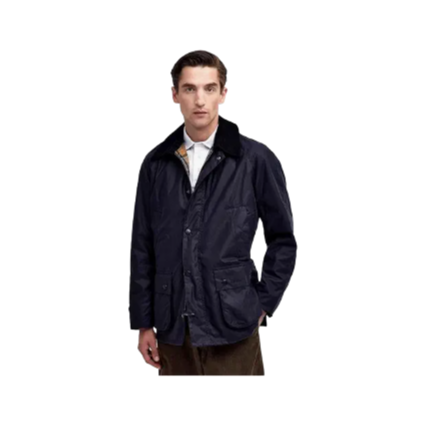
Barbour Men’s Ashby Waxed Jacket, Navy
- A modern take on the classic waxed jacket, crafted from 100% waxed cotton for durability and weather resistance.
- Features a stand collar with a snap throat latch for added protection and a tailored, sleek look.
- Fully lined for enhanced comfort and warmth, making it ideal for cooler temperatures.
- Long sleeves and standard-length design provide timeless style and practical coverage.
- Perfect for both urban environments and outdoor adventures, combining function with Barbour’s iconic heritage design.
$378.00
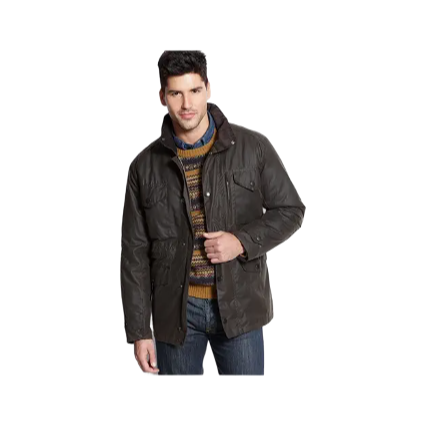
Barbour Men’s Sapper Wax Men’s Waxed Cotton Jacket
- A rugged yet sophisticated jacket made from durable cotton with a polyester lining for all-weather comfort.
- Designed with a secure zipper closure for easy wear and a tailored fit.
- The practical design includes multiple pockets for functionality, making it great for outdoor activities.
- Easy to maintain with hand-wash-only care instructions to preserve the waxed finish.
- A versatile and stylish piece, perfect for layering during outdoor adventures or casual outings.
$445.00
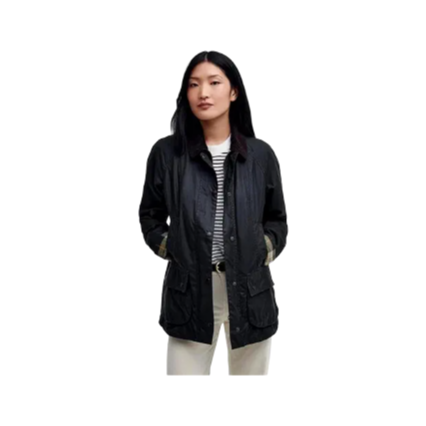
Barbour Women’s Beadnell Waxed Jacket, Sage
- A classic and timeless jacket featuring a corduroy collar and long sleeves for a polished country-inspired look.
- Equipped with a front zip closure and snap-over storm flap for extra protection against the elements.
- Crafted from 100% Sylkoil Waxed Cotton with a cotton tartan lining, providing warmth and a touch of heritage style.
- Nylon-lined sleeves ensure durability and make it easy to layer over other clothing.
- Sponge clean only, making it an ideal choice for outdoor wear that requires minimal maintenance.
$378.00
Finding Heritage in a Disposable World: My Journey to the Perfect Wax Jacket
Stepping out into the biting November air last weekend, I caught my reflection in a shop window and couldn’t help but smile. The rich olive waxed cotton of my Barbour jacket had weathered to a perfect patina after years of faithful service. Rain beaded on its shoulders as if to demonstrate, once again, why a Barbour waxed jacket is the best investment you’ll ever make in outerwear.
I remember the day I bought it—uncertain about spending that much on a coat, wondering if the hype was justified. Five years, countless downpours, and three rewaxings later, I’m a convert, an evangelist even. While friends cycle through trendy coats each winter, my Barbour looks better each season.
If you’re considering joining this legacy of practical luxury, this guide walks you through everything I wish I’d known before buying my first Barbour. From decoding the surprisingly vast range of models to understanding the maintenance that will keep your jacket performing for decades, I’ll share the knowledge I’ve gathered both as an owner and through conversations with the passionate Barbour community.
The Rich History Behind Every Barbour Stitch
Before diving into buying advice, let’s appreciate what you’re really investing in. When I first researched Barbour, I was struck by how deeply its story is woven into British heritage—and why that matters to the quality you receive today.
John Barbour established J. Barbour & Sons in 1894 in South Shields, England, creating durable outerwear for sailors, fishermen, and dockworkers facing the harsh North Sea elements. These weren’t fashion items; they were tools essential for livelihood and survival.
What started as utilitarian workwear for laborers transformed over generations into trusted gear for the British countryside elite. The Royal Family’s endorsement (Barbour holds three Royal Warrants) elevated the brand while maintaining its commitment to function. The jackets draped over the shoulders of farmers and gamekeepers found their way to royalty, yet remarkably, the core product remained largely unchanged.
I find something deeply reassuring about this consistency. In our world of planned obsolescence, Barbour has built its reputation on the opposite principle—creating products designed to last generations, not seasons. The same waxed cotton that protected sailors from driving rain and sea spray over a century ago shields modern wearers from urban downpours with equal effectiveness.
Walking through London on a particularly dismal day last winter, I spotted three different people wearing Barbour waxed jackets. One looked fresh off the rack; another was clearly decades old, worn to a beautiful fade with patches at the elbows. The third—on a stylish woman pairing it with designer boots—had been customized with colorful lining. Each represented a different interpretation of the same enduring classic.
Decoding the Barbour Range: Not Just One Waxed Jacket
My first surprise when shopping for a Barbour was discovering the extensive range of models. “I’ll just get a Barbour waxed jacket” quickly became “Which Barbour?” Here’s my breakdown of the main styles you’ll encounter:
The Barbour Beaufort
The Beaufort was my first Barbour, and I consider it the quintessential model. Designed in 1983 by Dame Margaret Barbour herself, it’s a medium-length shooting jacket with a relaxed fit. The rear game pocket (a large pouch accessible from both sides) initially seemed strange to me, but has become unexpectedly useful for stashing gloves, a newspaper, or even a small laptop.
The Beaufort features a classic corduroy collar that can be popped up against wind and rain. The collar can also accommodate an optional snap-on hood or zip-in liner for colder days. The traditional tartan lining adds a touch of heritage elegance whenever you remove it indoors.
What I appreciate most about the Beaufort is its versatility. I’ve worn it over business attire and with jeans and boots. Its slightly roomier cut allows for layering without looking bulky. If you’re only going to own one Barbour, the Beaufort deserves serious consideration.
The Barbour Bedale
Initially designed for horseback riding, the Bedale is shorter than the Beaufort, ending at the hip rather than mid-thigh. This compact cut makes it ideal for city wear and driving. The elastic storm cuffs and close fit provide excellent weather protection while maintaining a trimmer silhouette.
When I tried the Bedale, I found it slightly more contemporary looking than the Beaufort, despite being an older design. A friend who commutes by motorcycle swears by his Bedale for its shorter length and snug fit. The shorter cut makes it less bulky when seated but offers less coverage during heavy rain.
The Barbour Ashby
The Ashby represents Barbour’s nod toward more modern styling. It’s essentially a slimmer, more tailored version of the Bedale with a slightly longer cut. I’d describe it as the urban interpretation of the classic Barbour.
What attracts many to the Ashby is its more contemporary fit without sacrificing traditional Barbour details. The waxed cotton is slightly lighter, making it less stiff initially. If you’re slender or prefer a more fitted look, the Ashby might be your perfect match. A colleague who hesitated about Barbour’s traditional boxy cut found his perfect match in the Ashby.
The Barbour Border
For taller individuals or those wanting maximum coverage, the Border extends the Beaufort’s design to a longer length. When I tried it on (I’m 6’1″), the extra length provided welcome protection for my thighs during heavy rain. However, I ultimately chose the Beaufort for its versatility.
The Border shares most features with the Beaufort but offers additional protection from the elements. The longer cut makes it especially popular for country pursuits and serious outdoor use. If you’ll be spending extended time outside in unpredictable weather, this extra coverage is invaluable.
The Barbour International
Taking a sharp turn from the countryside classics, the International draws inspiration from Barbour’s motorcycle heritage. With its distinctive slanted left breast pocket (designed for maps during rallies) and belted waist, it’s unmistakable.
I find the International appeals to those who appreciate Barbour’s quality but want something less traditional than the country styles. It carries a more urban, almost rebellious attitude while maintaining the brand’s commitment to durability and function.
The Barbour Lightweight Models
In recent years, Barbour has introduced lightweight waxed cotton jackets like the Lutz and Duke. These use a thinner waxed cotton that requires less break-in time while maintaining water resistance. They’re perfect for milder climates or as transitional season jackets.
I purchased a lightweight Barbour for spring use and appreciate its versatility. The reduced weight makes it comfortable for layering during unpredictable spring weather without the heft of traditional waxed cotton.
Sizing Secrets: Finding Your Perfect Fit
Barbour sizing caused me considerable confusion at first. Traditional Barbour jackets run large by modern standards, designed to accommodate layers underneath. Here’s what I learned:
First, understand that Barbour jackets are designed to be worn over layers, not as a slim-fitting fashion piece. When I first tried on my usual size, it felt boxy and oversized. The sales associate explained this was intentional—room for a sweater and possibly a light jacket underneath during harsh weather.
Second, different models fit differently. The classic models (Beaufort, Bedale, Border) have a traditional, roomier cut. The contemporary models (Ashby, Duke) feature a more tailored silhouette.
For classic models, my experience suggests sizing down one from your normal jacket size. I typically wear a 42 in suits but found a 40 in the Beaufort provided the right balance—enough room for layers without excessive bulk. For the Ashby and other slim-fit models, your regular size is usually appropriate.
Sleeve length is another consideration. Barbour sleeves tend to run slightly short by design, particularly on the Bedale. This isn’t a flaw—it prevents rain from running down your arms when reaching forward. The Beaufort and Border offer slightly longer sleeves if this is a concern.
The best advice I received was to try on multiple sizes with the type of clothing you’ll typically wear underneath. I visited the store wearing a light sweater over a button-down shirt, my typical fall attire. This gave me an accurate sense of how the jacket would perform in real conditions.
A final note on sizing evolution: longtime Barbour owners mention that older jackets (pre-2000s) run even larger than current production. If you’re considering a vintage Barbour from eBay or a secondhand shop, you might size down even further.
Classic or Modern: Choosing Your Color
When I began my Barbour search, I assumed olive green was the only authentic option. While olive remains the most traditional and versatile choice, Barbour offers several classic colors worth considering:
Olive: The quintessential Barbour color, olive develops a beautiful patina over time, fading to a distinctive greenish-brown at stress points. My olive Beaufort has lightened around the collar and cuffs, creating a personalized wear pattern I’ve come to cherish. Olive pairs effortlessly with countryside colors and urban wardrobes alike.
Navy: Navy offers a more urban interpretation while maintaining heritage appeal. A friend with a navy Ashby finds it transitions seamlessly between casual and semi-formal contexts. Navy shows less dirt and wear than lighter colors but still develops character over time.
Sage: Lighter than olive, sage presents a more subtle option that ages to an attractive pale green. I was tempted by sage but ultimately found olive more versatile for my wardrobe.
Rustic/Brown: The brown variants evoke a traditional hunting aesthetic. They pair beautifully with earth tones and develop a rich, antiqued look with wear.
Black: Black Barbours project a more urban, contemporary aesthetic. They show less obvious aging but develop subtle patina in the creases. My brother-in-law’s black International has developed an almost graphite sheen at the elbows and cuffs after years of wear.
Recently, Barbour has introduced limited edition colors and collaborations, some quite vibrant. While these offer distinctive options, I’d recommend starting with a classic color for your first Barbour. The traditional colors have proven their versatility across decades and contexts.
Remember that your Barbour will likely be with you for many years. Choose a color that complements your existing wardrobe and that you won’t tire of. My olive jacket has proven neutral enough to wear with everything from casual weekend attire to business casual settings.
The Price Question: Why Barbour Costs What It Does
Let’s address the elephant in the room: Barbour waxed jackets aren’t cheap. With new models ranging from $300-500, they represent a significant investment. When I was contemplating my purchase, I found myself questioning whether any jacket could justify that price.
Five years later, I can confidently say the value proposition makes sense. Here’s why:
First, consider longevity. While fast-fashion outerwear might last 2-3 seasons before looking tired or failing functionally, a properly maintained Barbour will serve you for decades. My uncle still wears the Beaufort he purchased in 1991—over 30 years of continuous service. Amortized over this timeframe, the cost per wear becomes remarkably reasonable.
Second, the performance remains unmatched for specific conditions. During a particularly nasty London downpour last year, I watched as water beaded perfectly on my well-maintained waxed cotton while colleagues in synthetic “waterproof” jackets gradually surrendered to the elements. There’s a reason these jackets have been trusted in the British countryside for generations.
Third, Barbour jackets retain significant resale value, unlike most clothing items. Well-maintained used Barbours often sell for 50-70% of their original price. Some vintage models with desirable features actually appreciate in value. This creates a safety net for your investment should you decide the style isn’t for you.
Finally, Barbour offers a repair service that extends the functional life of your jacket indefinitely. When my sleeve began to wear through at the elbow, Barbour repaired it for a fraction of the cost of a new jacket. This commitment to longevity represents a refreshing alternative to disposable fashion.
I’ve found that the initial investment in a Barbour waxed jacket pays dividends in performance, durability, and timeless style that no disposable alternative can match.
New vs. Used: The Vintage Barbour Option
An intriguing alternative to purchasing new is exploring the vibrant market for vintage Barbour jackets. During my research, I discovered entire forums dedicated to identifying and evaluating older models.
Vintage Barbours offer several advantages. Many enthusiasts believe older jackets (particularly those made before production expanded beyond the UK) feature heavier waxed cotton and sturdier construction. Certain discontinued details—like the “split” game pocket on older Beauforts or specific tartan linings—have developed cult followings.
A properly worn-in Barbour also bypasses the somewhat stiff break-in period new jackets require. The previous owner has already done the hard work of molding the waxed cotton to move naturally with the body.
However, buying used requires careful assessment. Look for:
- Intact seams and stitching, particularly at stress points like underarms and pockets
- Functioning snaps and zippers (brass zippers on older models can be repaired if necessary)
- No tears or holes in the main body fabric (small tears at cuffs or pockets are repairable)
- Even wear pattern without excessive thinning of the wax
Before purchasing my new Beaufort, I tried on several vintage models. While I ultimately preferred the assurance of a warranty and pristine condition, I’ve since acquired a 1980s Border from a secondhand shop that’s become a cherished bad-weather companion.
If considering the vintage route, research dating Barbour jackets by their label designs and features. The Barbour owner community has extensively documented the evolution of these details, allowing fairly precise dating of older jackets.
Beyond the Jacket: Essential Barbour Accessories
While the jacket itself is the star, several accessories enhance its functionality:
Hood: Most Barbour waxed jackets don’t come with attached hoods but offer compatible attachable options. I initially questioned this design choice but have come to appreciate its versatility. The detachable hood means I can adapt to conditions without always having excess fabric at my neck. Barbour offers both waxed cotton and waterproof nylon hood options.
Liners: For colder weather, zip-in liners transform your Barbour from a rainproof shell to a proper winter coat. Options range from lightweight fleece to luxurious fur-trimmed models. My quilted liner essentially creates two jackets in one—a lightweight waxed cotton jacket for mild days and a proper cold-weather system when combined.
Thornproof Dressing: This is Barbour’s proprietary wax formula for maintaining your jacket’s water resistance. A tin costs around $25 and contains enough for several applications. Learning to apply it properly (more on this later) extends your jacket’s functional life indefinitely.
Care Products: Barbour offers cleaning sprays specifically formulated not to damage the wax coating. I’ve found these gentler than standard detergents, which can strip wax and damage the cotton.
Repair Kit: For minor damage, Barbour sells small repair kits containing waxed cotton patches and thread that match their various jacket colors. I’ve used these for small tears with good results, though significant damage warrants professional repair.
When budgeting for your Barbour, I recommend factoring in at least a hood and a tin of reproofing wax. These modest additions significantly enhance versatility and longevity.
The Rewaxing Ritual: Maintaining Your Investment
Perhaps the most distinctive aspect of Barbour ownership is the maintenance routine. Unlike synthetic jackets that gradually lose their technical properties until they’re discarded, waxed cotton can be indefinitely restored to its original performance.
When I first heard about rewaxing, it sounded intimidating. Now it’s become an almost meditative annual ritual I look forward to each autumn. Here’s my process:
First, I gently clean the jacket using a damp sponge and cold water, focusing on visibly soiled areas. Harsh detergents strip the wax, so I avoid them entirely. For stubborn spots, Barbour makes a dedicated cleaning spray that preserves the wax coating.
Next comes preparation. I clear a large table, cover it with newspapers, and gather supplies: Thornproof Dressing, a hair dryer, clean cloths, and an old sweater to wear (wax can transfer to clothing). The jacket should be completely dry before beginning.
The application itself is straightforward but requires patience. Working in small sections, I scoop a small amount of wax with my fingers and spread it evenly across the fabric using circular motions. The wax softens with body heat, making fingers the ideal application tool. For even distribution, I use the hair dryer on low heat to melt the wax slightly, helping it penetrate the cotton fibers.
Special attention goes to seams, creases, and high-wear areas like elbows and cuffs. These regions tend to lose their wax coating first and benefit from slightly heavier application. The goal is even coverage without excessive buildup that could crack or flake.
After application, I hang the jacket overnight in a warm room to allow the wax to fully integrate with the fabric. The next day, I use a clean cloth to buff away any excess wax and ensure even distribution.
The transformation is remarkable. My five-year-old Beaufort emerges looking rejuvenated, with restored water resistance and a rich, healthy sheen. Water beads on its surface just as it did when new.
I rewax annually before the rainy season, though some hardcore users do it twice yearly. The frequency depends on your usage pattern and local climate. You’ll know it’s time when water begins to soak in rather than bead on the surface, or when the fabric looks dry and pale rather than having a subtle sheen.
While Barbour offers professional rewaxing services, learning to do it yourself saves money and creates a deeper connection with your jacket. Each application adds to the unique character that makes these jackets so special.
Where to Buy: Authorized Retailers vs. Alternatives
When I decided to purchase my Barbour, I researched various buying options. Here’s what I learned about the primary channels:
Barbour Retail Stores: The premier experience comes from Barbour’s own boutiques, where knowledgeable staff can guide sizing and model selection. These stores often carry exclusive models and accessories not available elsewhere. The South Shield flagship store in particular offers an impressive historical display alongside current merchandise.
Department Stores: High-end department stores like Nordstrom, Bloomingdale’s, and their international equivalents typically stock core Barbour models. These offer the advantage of easy returns and the ability to try multiple sizes. However, staff knowledge can vary significantly.
Specialty Menswear/Outdoor Retailers: These often provide the best combination of expertise and selection outside Barbour’s own stores. Established country outfitters and heritage menswear shops frequently employ staff with deep Barbour knowledge. My own purchase came from such a shop, where the owner spent nearly an hour explaining the nuances between models.
Online Retailers: Numerous authorized online retailers offer Barbour jackets, often at competitive prices. I recommend sticking with established names like End Clothing, Country Attire, or Cox the Saddler that specialize in heritage brands. These retailers understand the products and typically ship with proper packaging to protect your investment.
Secondhand Markets: For vintage models, specialized resellers on eBay, Etsy, and Grailed offer curated selections. Prices vary widely based on age, condition, and rarity. The Barbour subreddit and various forums provide guidance on authenticating vintage pieces.
A word of caution about unauthorized channels and counterfeits: As Barbour’s popularity has grown, so has the market for fakes. Authentic Barbour jackets feature distinctive details including precise label stitching, correctly branded hardware, and specific pattern alignment. Suspiciously low prices, especially from unfamiliar online retailers, often indicate counterfeits.
When I purchased my Beaufort, I ultimately chose a specialty menswear shop that offered in-person fitting and maintained a relationship with Barbour spanning decades. The slightly higher price compared to online options was offset by the confidence in receiving expert guidance and authentic merchandise.
Breaking In: The Journey from Stiff to Sublime
One aspect of Barbour ownership that surprised me was the break-in period. New waxed jackets arrive stiff and somewhat unyielding—almost like lightweight armor rather than comfortable clothing. This initially concerned me, but I soon discovered it’s an essential part of the Barbour experience.
The break-in process transforms your Barbour from a generic garment to a personalized piece that reflects your body and movement patterns. It typically takes 3-6 months of regular wear, though variables like climate and frequency of use affect the timeline.
During my first few weeks with the Beaufort, I found the arms particularly rigid when bending my elbows. The body seemed to stand away rather than draping naturally. Gradual, consistent wear softened these issues. As the waxed cotton molded to my movements, comfort dramatically improved.
Embracing this process rather than fighting it yields the best results. Wear your Barbour as often as weather permits, particularly in the first season. Each wear softens the fabric slightly and begins creating the unique wear patterns that distinguish a well-loved Barbour.
Avoid shortcuts like machine washing or excessive heat, which damage the wax coating and underlying cotton. The natural break-in creates a jacket that moves with your body without compromising weather protection.
By the end of my first winter with the Beaufort, the transformation was remarkable. The once-stiff jacket had developed subtle creases at the elbows and a gentle contour to my body shape. The collar, initially standing at attention, now had a relaxed drape that framed my face comfortably.
This evolution continues indefinitely. Five years later, my Barbour has developed a character impossible to replicate in new garments. The cotton has a supple hand while maintaining its protective qualities through regular rewaxing.
Styling Your Barbour: From Countryside to City Streets
One of Barbour’s most remarkable qualities is its versatility across contexts. The same jacket appropriately accompanies Wellington boots through muddy fields and complements dress shoes in urban settings. Here’s how I’ve styled my Barbour across different scenarios:
Country/Outdoor: The jacket’s native habitat pairs it with durable boots, corduroys or moleskin trousers, and lambswool sweaters. A tattersall shirt underneath completes the traditional British country look. For practical outdoor use, layering is key—the room designed into classic Barbour models accommodates substantial insulation underneath.
Urban Casual: In city settings, I pair my Beaufort with dark jeans, leather boots or clean sneakers, and either a solid sweater or button-down oxford shirt. This combination balances the jacket’s rugged heritage with contemporary urban style. The contrast between the weathered waxed cotton and more refined elements creates an appealing tension.
Business Casual: Perhaps most surprisingly, Barbour jackets complement business casual attire remarkably well. Over chinos or wool trousers, with leather shoes and a merino sweater or knit tie, the Barbour lends an established, confident air to professional dress. The juxtaposition of traditional outerwear with business attire projects thoughtful authenticity rather than stuffy conformity.
Accessories significantly influence how your Barbour reads in different contexts. A colorful cashmere scarf elevates it for city wear, while a plain wool scarf maintains the country aesthetic. Similarly, leather gloves suggest urban sophistication, while knitted ones reinforce rural associations.
Color coordination matters too. My olive Beaufort pairs naturally with earth tones and traditional menswear colors. Navy Barbours offer even greater versatility, complementing both country tweeds and city blacks with equal facility.
What I appreciate most is how the jacket has adapted to my evolving style over the years. As my wardrobe has shifted from predominantly casual to incorporating more tailored elements, my Barbour has remained relevant, changing its character based on what accompanies it.
The Barbour Community: A Unexpected Fringe Benefit
An unexpected joy of Barbour ownership has been discovering the passionate community surrounding these jackets. From dedicated subreddits to specialized forums like the “Barbour Appreciation Thread” on styleforum.net, enthusiasts share knowledge, restoration tips, and tales of particularly beloved jackets.
Shortly after purchasing my Beaufort, I posted a question about caring for the corduroy collar. Within hours, I received detailed responses from owners with decades of experience, including specialized techniques passed down through generations of Barbour wearers.
This community preserves institutional knowledge that might otherwise be lost. When considering various models, archives of user experiences helped me understand subtle differences not apparent from official descriptions. Historical information about discontinued features and changing production methods informs both new purchases and the appreciation of vintage pieces.
Beyond practical advice, these communities celebrate the cultural significance of Barbour jackets. Members share photos of their well-worn coats, each telling a story through its unique pattern of wear, repairs, and modifications. Particularly venerable examples, sometimes spanning decades of continuous use, achieve almost legendary status.
I’ve come to value this aspect of Barbour ownership nearly as much as the jacket itself. In a world of disposable fashion, these communities maintain a connection to traditional craftsmanship and the idea that some garments improve rather than deteriorate with age and use.
Making Your Final Decision: Questions to Consider
After exploring all these aspects, how do you make your final decision? Based on my experience and conversations with other owners, consider these questions:
What’s your primary use case? Will you wear your Barbour primarily in rural settings, urban environments, or both? The Border and Northumbrian thrive in true countryside conditions, while the Ashby and Bedale adapt more readily to city wear.
What’s your typical build and height? Taller individuals (over 6′) often prefer the Border’s longer length, while the Bedale suits shorter frames. The Ashby offers a slimmer cut for those with leaner builds who find traditional models too boxy.
What’s your local climate? In truly cold regions, you’ll want a model that accommodates substantial layering or a zip-in liner. For milder, rainy climates, the lightweight models provide adequate protection with less bulk.
How much break-in are you willing to endure? Traditional heavy waxed cotton requires more break-in time but offers superior durability and weather resistance. Lightweight models feel comfortable sooner but may not develop the same rich character over time.
What’s your budget? Beyond the jacket itself, consider accessories like hoods and liners that enhance versatility. A comprehensive Barbour system might include these additions, affecting your total investment.
New or vintage? Assess whether you prefer the assurance of new condition and warranty coverage or the immediate character and potential value of a vintage piece. Both paths lead to rewarding ownership experiences.
As I weighed these factors, the Beaufort emerged as my perfect match—versatile enough for both country weekends and city commuting, with room for layers without excessive bulk. Your calculation might yield a different result based on your specific needs and preferences.
Conclusion: The Beginning of a Lifelong Relationship
Purchasing a Barbour waxed jacket isn’t merely buying a coat—it’s beginning a relationship that evolves over years and potentially decades. Unlike disposable fashion designed for obsolescence, these jackets are created to accompany you through life’s adventures, developing character that reflects your shared journey.
Five years into my Barbour ownership, I’ve come to see my initial purchase as an introduction rather than a conclusion. What began as appreciation for practical quality has evolved into a deeper connection with heritage craftsmanship and the distinctive pleasure of owning items that improve with age.
My Beaufort bears witness to countless rainy walks, autumn hikes, and winter commutes. Each rewaxing session preserves these experiences while preparing for future ones. The jacket has traveled with me across three countries and adapted to dramatically different contexts without losing its essential character.
If you’re contemplating your first Barbour, I encourage you to see beyond the initial investment to the decades of service these remarkable garments provide. In a world increasingly dominated by the transient and disposable, a Barbour waxed jacket represents a refreshing commitment to permanence, quality, and the beauty that emerges only through genuine use.
The perfect Barbour is waiting to become your companion through whatever adventures lie ahead. Choose wisely, maintain lovingly, and enjoy the evolving character that makes these jackets not just clothing, but cherished possessions that tell your story through every weathered crease and hard-earned patina.
